120 Food Blogger Social Media Templates: A Modern Toolkit
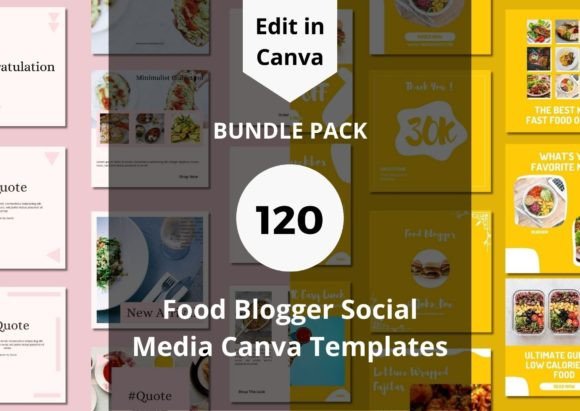
For any food blogger, content creator, or small business owner in the culinary space, the challenge is rarely the quality of the recipe or product. It's the constant, demanding cycle of creating visually compelling, on-brand content for social media. The 120 Food Blogger Social Media Templates package is a direct response to that reality. It’s not just a collection of designs; it’s a strategic system built to streamline your workflow and elevate your visual identity across platforms like Instagram.
Understanding the Visual Language and Appeal
At its core, this collection is a masterclass in modern typography and layout for the food industry. The visual personality strikes a crucial balance: it’s clean and contemporary, yet warm and inviting. You’ll find a thoughtful mix of sans serif font choices for body text, ensuring excellent readability, paired with elegant serif font accents for headings or quotes. Several templates incorporate tasteful script font or handwritten font elements, adding a personal, artisanal touch that feels authentic to the food blogging niche. The overall style avoids being overly whimsical or childish, instead leaning into a professional, appetizing aesthetic that builds trust.
The appeal lies in this versatility. Whether your brand identity is minimalist and health-focused, rustic and homestyle, or bold and gourmet, the templates provide a flexible foundation. They act as sophisticated design assets, allowing you to showcase your photography with layouts that enhance, rather than compete with, your content. The color palettes are typically neutral, allowing your food imagery to be the hero, while strategic pops of color can be easily modified in Canva to match your specific brand identity.
Strategic Applications Beyond the Instagram Feed
While labeled for social media, the utility of the 120 Food Blogger Instagram or Social Media Post Templates extends far beyond a single platform. Think of them as a core component of your digital design toolkit.
- Brand Consistency: Using the same design system across your Instagram stories, Pinterest pins, and Facebook ads creates a seamless visual experience. This consistency is fundamental to building brand recognition and a professional image.
- Content Marketing: The templates can be adapted for editorial design elements. Use them to create consistent featured images for blog posts, recipe cards, or promotional graphics for email newsletters.
- Packaging & Print: For those selling physical products like sauces, spice blends, or cookbooks, the design language can inform packaging design and print materials. The premium font pairings and layouts can help create a cohesive look from your logo design to your product labels.
- Pitch Decks & Media Kits: When collaborating with brands, a polished, consistent visual presentation is key. These templates can help structure media kits or partnership proposals that look thoughtfully designed and credible.
The true power is in reducing decision fatigue. Instead of starting from a blank canvas each time, you have a library of professionally designed structures to populate, allowing you to focus on your core content creation.
Making the Templates Work for Your Brand
Acquiring the package is the first step; effective implementation is where the value is realized. Here’s practical guidance on integrating this creative font and layout system into your projects.
Evaluating Fit and Customization
Before diving in, assess your current brand assets. Do you have a defined color palette and primary logo? The templates are designed to be modified. The key is to test font pairings within Canva. While the provided typeface combinations are strong, you may want to swap one element to better match your existing display font or wordmark. Spend time with the included styles—are there enough carousel templates, quote graphics, or promotional layouts for your needs?
Prioritizing Readability and Hierarchy
A common pitfall is sacrificing clarity for style. As you customize, always review readability. Ensure your body text has sufficient contrast and size, especially for mobile viewing. Use the templates’ built-in visual hierarchy—the way they use font size, weight, and spacing—to guide your viewer’s eye to the most important information, whether that’s a call-to-action or a key ingredient.
Commercial Use and Licensing
This is critical for any commercial font or design asset. Always verify the licensing agreement included with your purchase. Most templates of this nature are licensed for commercial use, allowing you to create graphics for your business, client work (if specified), and monetized channels. However, you typically cannot resell the templates themselves as a product. Understanding these terms ensures you’re using the assets professionally and legally.
Ultimately, the 120 Food Blogger Social Media Templates are more than just pretty layouts. They are a framework for building a stronger, more consistent, and more engaging visual brand. By thoughtfully applying and customizing them, you can transform your social media presence from a time-consuming chore into a streamlined, professional extension of your culinary passion.